
11 září, 2026
Your Manual on Casino Table Game Variants
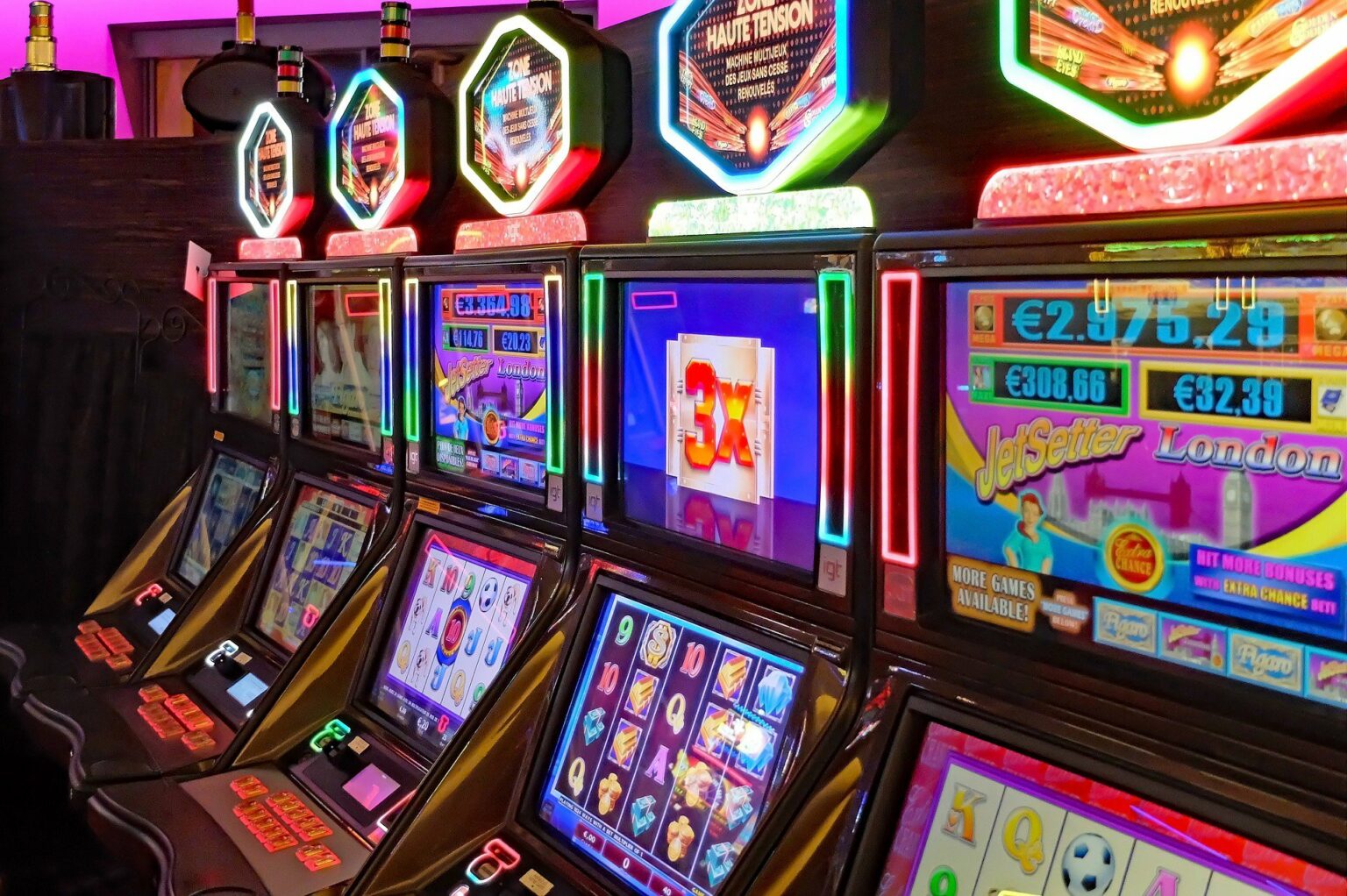
Entering the digital lobby of a modern casino platform like Ivibet Casino can feel like walking into a vast, glittering hall where every table narrates a distinct story. The pure variety of table games available today goes far past the classic green felt you might picture in your mind. We have gone beyond the era where blackjack and roulette were monolithic experiences. Now, each classic game has generated a family of variants, each with its own mathematical twists, side bets, and strategic layers. Our goal here is to chart that territory plainly. We want you to comprehend not just the names of these variants, but how a solitary rule change can change the house edge, shift the pacing, and completely reshape the way you engage with a game. This knowledge is your foundation for every session you will ever play.
Baccarat Paths and the Tradition of the Squeeze
Baccarat variants might look indistinguishable to the inexperienced eye, but the encounter diverges dramatically based on speed, presentation, and the ceremonies embedded in the system. The central mathematical structure stays sacred across almost all versions: you play on Player, Banker, or Tie, with the Banker bet carrying a small charge on victories to keep the house edge. What differs is the theatrical presentation. Speed Baccarat is built for the high-frequency player who wants to eliminate waiting time. Every hand is shown face-up right away, with no long pause, cutting the round time to roughly 27 seconds. This version caters to the analytical mind that desires absolute, unadulterated volume, allowing you to process numerous hands in a one session and depend heavily into statistical analysis without waiting for formal card displays.
At the far end of the scale lies the tradition-rich encounter of games that mimic the „squeeze.“ In a live dealer setting, this is a tradition where the dealer slowly and theatrically uncovers the card’s number by lifting back its edges, a tradition historically reserved for big-spending players in Macau. Virtual types replicate this suspense through animated card glimpses that you can direct, dragging a on-screen finger across the display to uncover the pips individually. This is not merely cosmetic. The squeeze ritual changes baccarat from a simple win-lose outcome into a thrilling narrative, and many players realize that this emotional involvement helps them handle the emotional fluctuations of the game more effectively than the immediate result of Speed Baccarat.
We also see structural versions like No Commission Baccarat, which takes away the usual 5% charge on victorious Banker bets. This appears like a ideal situation, but the casino must get back its advantage in other ways. Typically, this is achieved by altering the payout on a successful Banker hand that totals exactly six. Instead of giving even money, a Banker win with a six pays only half your wager. This rule adjustment changes the strategy not in terms of which bet to put—Banker is still numerically optimal—but in how you calculate your projected profit per session. A shoe rich on six-value Banker wins will pay out much less than a normal commission game, so you need to be aware that the „no commission“ tag masks a distinct kind of expense that kicks in on a certain, fairly common result.
Roulette Wheels and the Mathematics of Change
Roulette versions are determined almost entirely by the wheel’s structure, and that structure dictates the mathematical destiny of every chip you put down. The most dramatic divide is found between European and American Roulette. European Roulette features a single zero pocket, producing a house edge of 2.70%. American Roulette adds a double zero pocket, which spikes the house edge to 5.26% without giving any additional payout benefit to the player. This is not a subtle difference; it means that over time, the American wheel eats up your bankroll nearly twice as fast for the exact betting strategy. We always suggest players to examine the wheel layout before playing, as the visual contrast between a single-zero and double-zero layout is the single most important bit of information you can have before placing your bet.
Beyond the zero count, French Roulette takes the European single-zero wheel and introduces a layer of player protection through the „La Partage“ or „En Prison“ rules. If you put an even-money bet—such as red, black, odd, or even—and the ball lands on the single zero, you keep your wager immediately. Under the La Partage rule, you obtain half your stake back, effectively reducing the house edge on those specific bets to a remarkably low 1.35%. The En Prison rule is even more captivating; your losing even-money bet is held „in prison“ for the next spin. If it wins on the subsequent spin, you receive your original stake back. These rules turn roulette from a game of pure chance with a steep mathematical disadvantage into one of the fairest propositions in the casino for even-money players.
Modern innovation has also produced wheels that break the traditional laws of physics entirely. Multi-Wheel Roulette lets you to place a single bet that works simultaneously to up to eight independent wheels spinning at once. This amplifies the action and minimizes short-term variance, as you are far more likely to strike your number across eight independent results, though the payout per hit remains the same. Then there are games with racetrack betting interfaces that let you make complex „call bets“ or „announced bets“ with a single click. These are fixed patterns of chips covering specific sectors of the wheel, such as Voisins du Zéro or Tiers du Cylindre. These bets are not just visual gimmicks; they represent a deep understanding of wheel geography, allowing you to cover contiguous number neighborhoods that would take dozens of individual chip placements to replicate manually.
Poker Games Where the Dealer is Your Only Opponent
Table poker games match you directly against the dealer’s qualifying hand instead of against other players, which forms a unique strategic environment centered solely on paytable optimization. Casino Hold’em is likely the most intuitive entry point as it mirrors the community-card structure of Texas Hold’em so closely. You make an ante, receive two cards, and choose whether to fold or call upon seeing the flop. The strategic depth lies in knowing which marginal hands justify a call. The general rule we teach states that any pair, any flush or straight draw, and even high-card combinations with strong backdoor potential are typically worth playing. Folding too often bleeds your ante away, while calling too wide subjects you to the turn and river as the dealer’s hand improves. The optional bonus bet pays out on premium starting hands irrespective of the final result, adding a lottery-style overlay to the strategic core.
Three Card Poker operates on a totally different tempo. Here, you are dealt just three cards and must determine whether to play or fold based on that single, static holding. The dealer must have a hand of queen-high or better to qualify. If they fail to qualify, your ante bet returns even money, but the play bet simply pushes. This qualification rule is the core of the game’s strategy. You should play every hand of queen-six-four or better, and fold everything lower. The reason is mathematical: folding weaker hands minimizes the damage when the dealer does qualify and beats you, while playing the minimum qualifying hand guarantees you capture value when the dealer fails to make the cut. The Pair Plus side bet ignores the dealer entirely and pays based solely on your own hand’s poker value, making it a pure volatility play that runs parallel to the main strategic decision.
Caribbean Stud brought the world to the growing jackpot side bet that has evolved into a staple of table poker variants https://ivibetcasino.or.at/. In this game, you compete against the dealer with a five-card stud hand, and the dealer must qualify an ace-king combination or better. The key nuance is that you must bet double your ante to see the showdown, as the call bet is exactly twice the ante. This means you should only call with hands that have a legitimate chance of beating a qualifying dealer hand, generally ace-king-jack or better. The progressive jackpot bet is a single unit and offers escalating prizes for hands starting at a flush and climbing to a royal flush. The jackpot is often linked across multiple tables and grows in real time, creating a apparent, communal prize pool that adds a layer of excitement entirely separate from the head-to-head math against the dealer.
Handling Payment Flows and Platform Security for Table Games
The practical reality of playing table game variants online encompasses a financial layer that is equally crucial as the rules at the felt. When you fund your account to play these games, the payment methods you can use will determine how quickly you can capitalize on a strategic insight or a favorable table condition. Modern platforms usually support a spectrum of options including credit and debit cards, a range of e-wallets, prepaid vouchers, and increasingly, direct bank transfer services that circumvent intermediary layers. Card deposits are typically instantaneous, allowing you to move from a funding decision to a blackjack seat in under a minute. E-wallets often offer the fastest withdrawal experience, sometimes processing payouts within twenty-four hours of approval. Bank transfers, while secure, are at the slower end of the spectrum, and the pending period can stretch to several business days. We always advise verifying your account fully before making a significant deposit, as this step is the gateway to unhindered withdrawals later.
Security and licensing are the invisible architecture that assures the variants you play are fair and your funds are protected. A legitimate platform functions under the oversight of a recognized regulatory body that mandates regular audits of the random number generators powering each game variant. This means the multi-wheel roulette spin, the blackjack card sequence, and the Sic Bo dice roll are all generated by algorithms that have been tested for statistical randomness and unpredictability. Seek out licensing information displayed clearly, usually in the page footer. This shows that the operator adheres to protocols regarding the segregation of player funds from operational capital, meaning your balance is held in protected accounts. Additionally, responsible gaming tools should be integrated directly into your account interface, allowing you to set deposit limits, session time reminders, and loss thresholds. These tools are not just a regulatory checkbox; they are the practical means by which you preserve control over the strategic, mathematical engagement that table games demand, ensuring that the pursuit of a perfect strategy never veers into an unmanaged chase.
Dice-based Games Beyond the Pass Line
When we speak of dice table games, the conversation extends far beyond the traditional craps layout, though grasping that groundwork is essential. Craps itself is a game of multilayered complexity where the pass line bet is just the commencement. The variant experience here comes from how a site presents the game. Some designs strip away the cluttered layout and offer a simplified „Craps First Person“ experience, where you handle the dice throw with a timed button press that impacts the outcome through a verified random number generator. Others concentrate on the live dealer format, where a actual table is streamed and a real stickman oversees the action. The variant you pick dictates the pace. A live table runs on a human rhythm with applause and pauses, while a digital table can process rolls immediately, enabling you to place sophisticated multi-roll bets without experiencing rushed by a crowded pit.
Sic Bo is an ancient Chinese dice game that has found a modern home in online casinos, and its variants are distinguished by the range of their betting maps. umfassender Leitfaden The traditional game uses three dice and provides a staggering array of wagers, from basic big and small bets that cover roughly half the outcomes and pay even money, to specific triple bets that pay as high as 180 to 1. The house edge varies wildly across these options. The small and big bets carry a comparatively modest edge of about 2.78%, while the specific triple bets can carry an edge exceeding 30%. A well-designed Sic Bo variant will plainly display the win probabilities for each bet type, and we highly encourage you to review these before placing chips. Some modern variants incorporate „Super Sic Bo,“ which adds random multipliers onto specific bet spots after the betting window closes. A winning bet that lands on a multiplied spot can pay out at substantially inflated odds, turning the game into a blend of prediction and luck that attracts players who like the uncertainty of game-show-style mechanics.
The Live Dealer Transformation of Standard Tables
Live dealer technology has not merely copied table games; it has birthed entirely new variants that would not be possible in a physical casino without massive infrastructure. Take Lightning Roulette, which uses a standard European single-zero wheel but overlays a high-voltage multiplier mechanic. Before each spin, a random number generator picks between one and five „lightning numbers“ and assigns them multiplied payouts spanning from 50x to 500x. If you put a straight-up bet on that number and it hits, you obtain the multiplied payout instead of the standard 35:1. To support this, the base straight-up payout is reduced to 30:1. This changes the game’s volatility profile dramatically. You are giving up a small amount of consistent return on every straight-up win in return for the chance at a massively outsized payout, making bankroll management a distinct challenge entirely compared to standard roulette.
Game show hybrids represent the boldest branch of the live dealer variant tree, blending table game mechanics with the theatrics of a television studio. Dream Catcher is a vertical spinning wheel with numbered segments, but its true variant offspring like Crazy Time and Monopoly Live take the concept much further. These games include a main wheel spin that can trigger bonus rounds, which are fully realized digital environments with their own rules and multipliers. A single spin of the main wheel can transport you to a Pachinko-style wall dropping a puck onto multipliers, or a Monopoly board where a virtual Mr. Monopoly collects properties and builds houses. These are not table games in the traditional sense, but they reside in the live casino lobby and attract players who want the social interaction of a live host combined with the layered bonus mechanics of a video slot. The key to approaching these variants is to grasp that the base game payouts often support the bonus round potential, so your session will likely involve frequent small losses punctuated by rare, dramatic bonus entries.
Even within the more traditional live table space, alternatives like Infinite Blackjack and Auto-Roulette solve fundamental capacity problems. A physical blackjack table has seven seats; Infinite Blackjack enables an unlimited number of players to join the same virtual table and get the same initial two cards. From there, each player makes independent decisions on their own hand using an on-screen interface. This eliminates the frustration of waiting for a seat and allows you to compete at your own pace without pressure from other players. Auto-Roulette excludes the dealer entirely from the mechanical process, using a precision-launched ball in a perfectly maintained wheel, which draws purists who seek the fastest possible game rounds and depend on automated systems over human croupiers who might create subtle, unintentional biases through their throwing rhythm.
The Tactical Universe of Blackjack Types
Standard blackjack is currently a game of impressive depth, but the variant landscape is where the actual strategic texture appears. When we consider a title like European Blackjack, the main feature is that the dealer takes only one card face up and pauses to draw their second card until after the player has finished their hand. This ostensibly minor procedural difference erases the possibility of the dealer looking for a natural blackjack early, which directly impacts your doubling and splitting moves. You cannot know if you are doubling into a losing total, so the optimal strategy changes slightly toward care. On the other hand, American Blackjack provides the dealer with both a face-up card and a hole card, allowing for an early peek. This gives you more information and makes aggressive doubling and splitting mathematically less risky, creating a faster, more confident rhythm at the table.
The advent of side bets has created entire sub-genres of blackjack that resemble hybrid lottery games. Consider the popular 21+3 variant, which combines your first two cards and the dealer’s up-card to form a three-card poker hand. Suddenly, your blackjack hand is not just about reaching twenty-one; you are also chasing flushes, straights, and three-of-a-kind combinations on a separate paytable. This completely changes the betting tempo. You are juggling a base strategy wager while simultaneously betting on a high-volatility side bet. Another captivating branch is Blackjack Switch, where you play two hands simultaneously and are permitted to swap the top two cards between them. This player-friendly rule significantly reduces the house edge on the base game, but the casino adjusts by pushing on a dealer’s 22 instead of paying out, a nuance that compels you to rethink the value of a strong multi-card total entirely.
Perfect Pairs and Pontoon constitute two additional different evolutionary paths. Perfect Pairs is a simple side bet that rewards when your first two cards create a pair, with increasing prizes for a mixed, colored, or identical pair. It needs zero skill but brings a continuous layer of excitement to the initial deal. Pontoon, on the other hand, is a British-born variant that is practically a different game despite sharing blackjack’s DNA. Here, both dealer cards are dealt face down initially, and a five-card hand totaling 21 or less—a „five-card trick“—beats everything except a natural pontoon. The terminology varies too; you „twist“ instead of hit and „stick“ instead of stand. Grasping these linguistic and mechanical shifts is vital because a player who sits down at a Pontoon table expecting standard Vegas Strip rules will squander chips through fundamental strategic misunderstandings.